Dust, Ink, and Big Money: What Serious Collectors Know About the Hidden World of Literary Ephemera
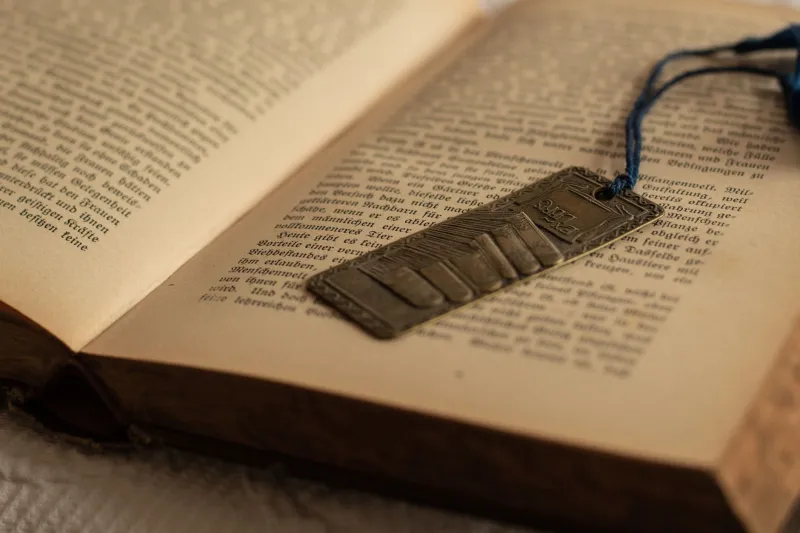
Somewhere in a climate-controlled storage unit outside of Portland, Oregon, a retired schoolteacher named Carolyn keeps 847 bookmarks organized by decade, material, and provenance. She knows the approximate print run of a 1920s silk ribbon marker from a Chicago department store. She can tell you, without blinking, which embossed leather markers from the 1890s are worth pursuing at auction and which ones are reproductions dressed up to look old. She has turned down offers on pieces that most people would mistake for junk.
"People think I'm eccentric," she laughs. "But I've watched a single inscribed page marker sell for more than my first car."
Carolyn isn't alone. Across the United States, a quietly passionate community of collectors has turned literary ephemera — bookmarks, bookplates, annotated first editions, author correspondence tucked between pages, and hand-painted page markers — into a serious secondary market. And while the broader rare book world gets plenty of attention, this particular corner of it has been flying mostly under the radar. Until now.
What Exactly Is "Literary Ephemera" and Why Does It Matter?
The term sounds academic, but the concept is beautifully simple. Literary ephemera refers to the small, often overlooked objects that exist in the orbit of books without being books themselves. Think Victorian-era trade card bookmarks printed by department stores. Think handwritten notes left inside a first edition by a previous owner. Think author-signed promotional bookmarks distributed at readings in the 1960s that most attendees promptly lost.
These items were never meant to last. That's precisely what makes surviving examples so compelling — and so valuable.
Dealers who specialize in this niche describe it as "the archaeology of reading culture." Every piece tells you something about who was reading, what they were reading, and the world they lived in while they turned those pages. A silk bookmark embroidered with a patriotic motif from World War II isn't just decorative — it's a document of a particular American moment.
The Prices That Are Turning Heads
For the uninitiated, the numbers can be genuinely shocking.
At a recent Heritage Auctions sale, a collection of early 20th-century celluloid bookmarks — the kind once given away as advertising premiums by insurance companies and dry goods stores — fetched nearly $3,400 for a lot of twelve. Individually, certain pieces from that collection would have gone higher had they been sold separately.
More dramatically, a bookmark personally inscribed by Ernest Hemingway to a friend, discovered tucked inside a copy of The Sun Also Rises at an estate sale in Connecticut, sold privately for an amount the dealer involved described only as "well into five figures."
Author-signed bookmarks from mid-century literary figures — Flannery O'Connor, John Steinbeck, Truman Capote — are particularly sought after, partly because they're more accessible price-wise than full signed first editions, but carry similar emotional weight for serious collectors.
"There's something intimate about a bookmark," says Marcus, a dealer based in Nashville who asked that his last name not be used. "A signed book is wonderful. But a bookmark that someone actually used, that lived inside a book for decades, that has someone's handwriting on it? That's a different kind of connection entirely."
The Estate Sale Pipeline
Here's the part that makes everyday readers sit up a little straighter: a significant percentage of the most valuable literary ephemera currently circulating through the collector market was found at estate sales, thrift stores, and library book sales — often by people who had no idea what they were holding.
This is both the thrill and the tragedy of the hobby. Pieces get thrown away. They get donated without a second thought. They get separated from the books they lived inside, losing context and sometimes value in the process.
Seasoned hunters have developed a specific approach to estate sales. They're not necessarily looking for the books themselves — they're looking for what's inside the books. A quick riffle through the pages of any old novel can reveal pressed flowers, handwritten grocery lists (occasionally fascinating in their own right), old photographs used as makeshift markers, and yes, actual vintage bookmarks that haven't seen daylight in sixty years.
"I always tell new collectors to think like an archaeologist," says Priya, who runs a small online shop specializing in pre-1950 paper ephemera out of her home in Austin. "You're looking for layers. The book is just the container. What was left inside it is often the real find."
Priya's best discovery to date was a hand-illustrated silk ribbon bookmark, circa 1910, found inside a water-damaged copy of a novel at a Goodwill outside of San Antonio. She paid thirty-five cents for the book. The bookmark eventually sold for $680.
What Makes Something Actually Valuable?
Not every old bookmark is a treasure, and collectors are quick to caution against the assumption that age alone equals value. Several factors drive prices in this market.
Provenance is king. A bookmark that can be traced to a specific notable person — a writer, a historical figure, a well-documented collection — commands a significant premium. Documentation matters enormously.
Condition is close behind. Fading, tears, water damage, and foxing all reduce value, though extremely rare pieces can sometimes survive condition issues if they're scarce enough.
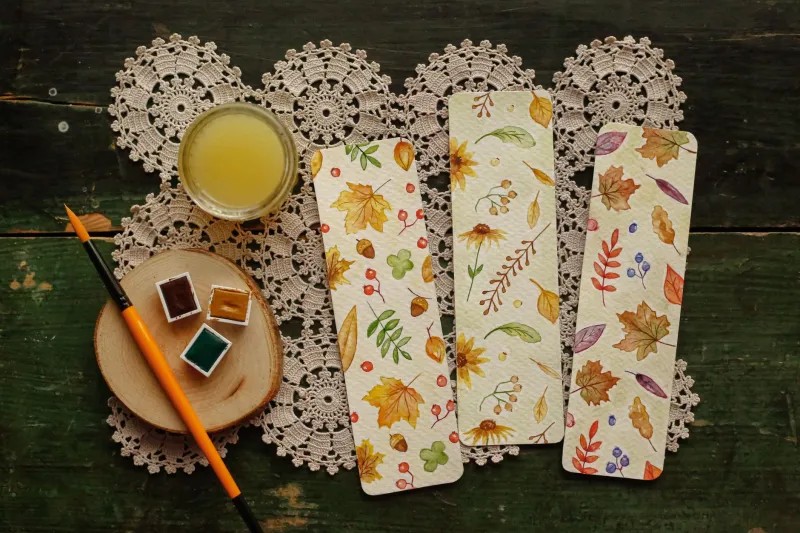
Material and craftsmanship matter more than most newcomers expect. Hand-painted silk markers from the 19th century, for example, are far more collectible than mass-produced paper bookmarks from the same era, even if the paper examples are older.
Cultural specificity also plays a role. Bookmarks tied to specific literary movements, regional publishers, or particular historical moments tend to attract more competitive bidding than generic examples.
Getting Started Without Getting Burned
For readers who are now eyeing their own bookshelves with fresh suspicion, the collector community offers some practical advice for dipping a toe into this world.
Start by educating yourself before spending any real money. Online forums dedicated to paper ephemera, groups on social platforms, and reference books on antique bookmarks are all solid starting points. The Ephemera Society of America is a well-regarded resource that connects new collectors with experienced ones.
Build relationships with reputable dealers rather than relying solely on auction platforms, where misattributed or misrepresented items occasionally slip through. A trusted dealer will often help you avoid expensive mistakes.
And if you're hunting at estate sales, go early, go often, and — most importantly — look inside every book you pick up. The next remarkable find could be sitting in a cardboard box marked "books, $1 each" at a sale in your own neighborhood.
A Market With Room to Grow
What's particularly interesting about literary ephemera collecting right now is how early it still feels, at least relative to other established collector categories. Rare coins, sports cards, vintage posters — these markets are mature, well-documented, and priced accordingly. Literary ephemera, by contrast, still has genuine discovery built into it.
That won't last forever. As more collectors enter the space and awareness grows, prices will continue climbing and the easy finds will become harder to come by. The people already deep in this world know it.
"Get in now," Carolyn says, with the calm confidence of someone who's watched this market quietly appreciate for two decades. "In ten years, the stuff sitting in estate sales today is going to be in serious collections. And people are going to wish they'd paid more attention."
For readers who've always believed that books carry something irreplaceable — a specific kind of human weight — it turns out the objects that lived alongside those books carry it too. Sometimes at auction. Sometimes for a lot of money. And sometimes for thirty-five cents at a Goodwill in Texas.