Small but Mighty: How Bookmarks Became the Hottest Collectible in Reading Culture
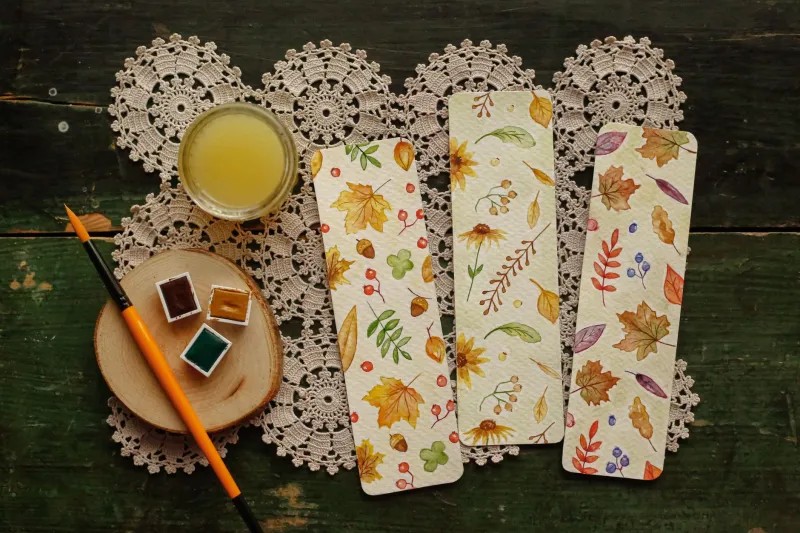
There's a running joke among book lovers that any scrap of paper — a receipt, a sticky note, a folded napkin — will do in a pinch. But a growing community of readers across the United States has decided that what holds their place in a story deserves a whole lot more respect. Welcome to the world of bookmark collecting, where a two-inch strip of material can cost upward of $80, sell out in minutes, and inspire the kind of devotion usually reserved for sneaker drops and vinyl records.
It sounds niche. It absolutely is. And that's exactly the point.
From Utility to Identity
For most of reading history, bookmarks were functional afterthoughts — thin rectangles handed out free at library events or tucked inside hardcover purchases. But somewhere between the rise of BookTok, the broader maker movement, and a collective craving for tangible beauty in a digital world, the humble bookmark got a serious upgrade.
Sarah Kowalski, a 34-year-old elementary school teacher from Portland, Oregon, started collecting bookmarks about four years ago after stumbling across a handmade leather design on Etsy. "I spent maybe twelve dollars on it, and I remember thinking it was the most beautiful thing I'd ever used while reading," she says. "Within six months I had forty bookmarks and had joined three different online groups dedicated to trading them."
Sarah's collection now sits at just over two hundred pieces, ranging from hand-tooled leather designs stamped with botanical motifs to limited-edition prints from independent illustrators. She keeps them organized in a custom binder with clear sleeves, the same way others might store baseball cards or vintage postcards.
"People think it's a little eccentric until they actually see the collection," she laughs. "Then they get it immediately."
The Makers Behind the Movement
Driving this resurgence is a wave of independent artists and small-batch craftspeople who recognized an underserved corner of the book lover market. At craft fairs from Brooklyn to Austin, bookmark makers are setting up tables alongside candle sellers and ceramic artists, and they're often the ones with the longest lines.
Denver-based designer Marcus Tran started making hand-stamped leather bookmarks as a pandemic hobby in 2020. He listed a few on Etsy almost as an afterthought. They sold within hours. "I genuinely didn't expect it," he admits. "I thought maybe my mom would buy one. Instead I got forty orders in the first week and had to figure out how to scale a one-person leather shop overnight."
Marcus now runs a small studio operation, producing limited runs of anywhere from twenty to one hundred bookmarks per design. He collaborates occasionally with local illustrators, creating pieces where the leather is laser-engraved with original artwork. Those collaborations, he says, sell out fastest — sometimes before he's even finished announcing them.
"There's real collector behavior happening," Marcus explains. "People are buying multiples of the same design — one to use, one to keep pristine. That tells you something about how they're thinking about these objects."
Limited Editions and the Thrill of the Drop
The limited-edition model has become central to bookmark culture in a way that mirrors streetwear and art print communities. Independent publishers and bookstores have caught on, partnering with artists to create exclusive bookmarks tied to book releases, store anniversaries, or reading events.
The Ripped Page, an independent bookstore in Chicago, began offering exclusive bookmark designs with special edition orders in 2022. Co-owner Diane Albrecht says the response genuinely surprised her. "We thought it would be a cute little add-on. Instead, we had people reaching out from other states asking if they could order just for the bookmark. We had no idea."
The store now releases a new collaborative design every quarter, working with a rotating roster of Chicago-based artists. Some designs have appeared on resale marketplaces for three to four times their original price — a sign that the collector economy around bookmarks is very real.
Online Communities Keeping the Hobby Alive
Like most niche hobbies in 2024, bookmark collecting thrives in the corners of the internet where enthusiasts find each other and build something bigger than any single collection. Reddit's r/bookmarks community has seen steady membership growth over the past two years. Facebook groups dedicated to bookmark swaps draw thousands of members who trade designs across state lines and international borders.
Instagram and TikTok accounts devoted entirely to bookmark aesthetics have built followings in the tens of thousands, with creators filming "bookmark hauls" and flat-lay photography that treats each piece like a miniature work of art.
"The community aspect is honestly what keeps me in it," says Priya Nair, a collector based in Atlanta who runs a bookmark-focused Instagram account with nearly fifteen thousand followers. "Yes, I love the objects themselves. But the people I've met through this hobby — other readers, artists, small shop owners — that's the real gift."
Priya organizes virtual swap events every few months, where participants mail bookmarks to strangers and document the exchange online. "It's like a pen pal situation but for book accessories," she says. "And everyone's always so thoughtful about what they send."
More Than a Pretty Placeholder
What's interesting about the bookmark collecting world is how deeply it connects to reading identity. Unlike other collectibles that can feel detached from their original purpose, bookmarks are still used — slipped between pages, carried in bags, handled daily. They exist at the intersection of function and art in a way that feels genuinely meaningful to the people who love them.
For Marcus Tran, that's the whole appeal of making them. "A bookmark lives inside a book," he says. "It goes on the journey with the reader. There's something really special about making an object that's that close to a story."
Sarah Kowalski puts it even more simply. "Every bookmark I own reminds me of a book I read, a mood I was in, a version of myself that existed at that moment. They're tiny little time capsules."
In a reading culture that's constantly looking for new ways to celebrate the physical, tactile joy of books, it turns out the answer was hiding between the pages all along — small, beautiful, and waiting to be noticed.