Why We Reach for Stories About Second Chances When Life Gets Hard
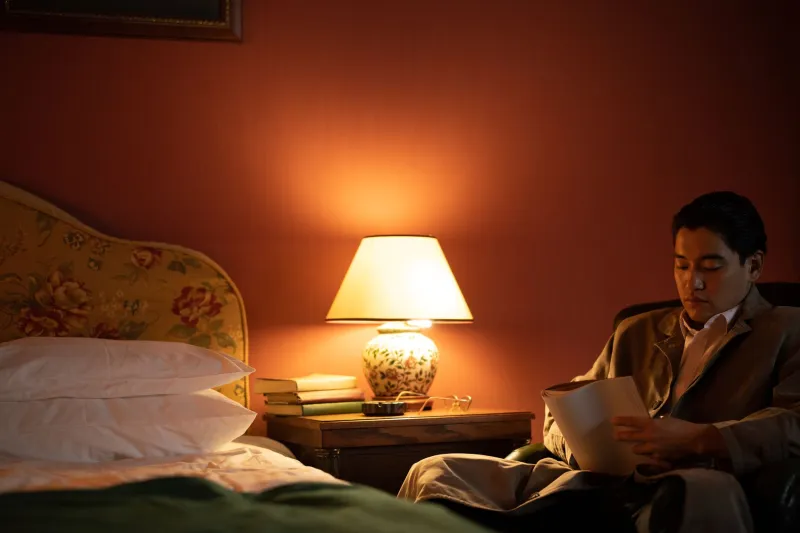
There's a particular kind of book that tends to find its way into people's hands during a crisis. Not thrillers. Not beach reads. Something quieter and more desperate — stories about characters who get to start over, make different choices, or discover that the life they almost lived was still somehow reachable.
Matt Haig's The Midnight Library became a cultural phenomenon in the early 2020s for a reason that had very little to do with marketing. It landed in the middle of a pandemic, a period of collective grief and rerouted plans, and it told readers exactly what they needed to hear: that the unlived life isn't necessarily better, but that the one you're in still holds possibility. The book spent more than 100 weeks on the New York Times bestseller list. That's not a coincidence.
The Sales Data Doesn't Lie
Booksellers across the country have started noticing a pattern. When economic anxiety spikes, when social unrest builds, when people feel like their futures are being rewritten without their input — certain genres quietly surge.
"We started tracking it more intentionally after 2020," says one indie bookseller in Portland, Oregon, who asked to remain unnamed. "During the height of the pandemic, we couldn't keep books like The Midnight Library, A Man Called Ove, and The Alchemist on the shelves. These aren't action books. They're books about people reconsidering everything."
Publishing industry data backs this up. According to NPD BookScan, literary fiction titles centered on themes of reinvention and redemption saw double-digit sales increases between 2020 and 2022. The trend didn't fully reverse when the pandemic eased — it just shifted slightly, tracking alongside other national stress indicators like inflation spikes and social polarization.
The pattern isn't new, either. After the 2008 financial crisis, titles like The Art of Racing in the Rain and The Shack — both steeped in themes of loss, hope, and second chances — became unexpected bestsellers. Readers weren't just looking for distraction. They were looking for a framework.
What Literary Psychologists Are Saying
Dr. Raymond Mar, a psychologist at York University who has spent years studying how fiction affects the human mind, has written extensively about narrative transportation — the phenomenon where readers become so absorbed in a story that they begin processing it as lived experience. His research suggests that when we read about characters navigating pivotal crossroads, our brains engage the same regions involved in real-world decision-making and empathy.
In plain terms: reading about someone else's second chance can feel, neurologically speaking, like practicing for your own.
"Fiction allows us to simulate lives we haven't lived," Mar has explained in his published research. "During periods of stress, when our own sense of agency feels diminished, narratives about transformation and choice become especially appealing because they restore a sense of possibility."
That's a clinical way of saying what most readers already know intuitively. When your own story feels stuck or broken, you pick up a book about someone who found a way through.
The Bookstore as a Barometer
If you want to understand what Americans are quietly worried about, walk into an independent bookstore and ask a bookseller what's been flying off the shelves lately. These people are accidental sociologists.
"I've been doing this for eleven years," says a bookseller at a shop in Austin, Texas. "And I can tell you that when people are scared — really scared, not just stressed — they stop buying cookbooks and start buying books that ask big questions. Who am I? What if I'd done this differently? Is it too late?"
She points to a recent cluster of titles that have been consistently strong sellers in her store: Remarkably Bright Creatures by Shelby Van Pelt, Tomorrow, and Tomorrow, and Tomorrow by Gabrielle Zevin, and Haig's follow-up The Comfort Book. Each one, in its own way, deals with the question of how we find meaning when the original plan falls apart.
"People don't always know why they're drawn to something," she adds. "They'll say they just wanted something uplifting. But when you look at what they're actually choosing, it's almost always about reinvention."
The Alternate Life Fantasy
There's also something worth examining in the specific subgenre of "alternate life" fiction — stories where characters literally get to see what would have happened if they'd made different choices. The Midnight Library belongs to this tradition, as does Kate Atkinson's Life After Life, Celeste Ng's work, and even lighter fare like The One by John Marrs.
These books tap into something psychologists call counterfactual thinking — the very human habit of imagining how things might have gone differently. Under normal circumstances, too much counterfactual thinking is associated with regret and rumination. But when it's channeled through fiction, it can function as a kind of emotional rehearsal.
"Reading about alternate paths in a safe narrative container lets us explore regret without drowning in it," explains one therapist who works with clients in New York City and frequently recommends bibliotherapy as a complement to traditional therapy. "The story gives the feeling a shape and an ending. Real life doesn't always do that."
What This Means for How We Read
For the reading community, this pattern raises something genuinely interesting: we tend to think of book choices as personal and idiosyncratic, driven by taste and mood. And they are. But they're also shaped by the cultural moment in ways we don't always consciously register.
Next time you find yourself gravitating toward a story about a character who gets a do-over, it might be worth asking what that pull is really about. Not to over-analyze the pleasure out of reading — but because understanding why a book calls to you is part of what makes the experience richer.
Books about second chances aren't just comfort reads. They're a form of collective processing, a way communities of readers work through uncertainty together, one page at a time. The fact that millions of Americans reached for the same kinds of stories during the same difficult years isn't just a sales trend. It's a conversation we've been having with literature — quietly, individually, but somehow all at once.
And that, more than anything, is what makes the reading life worth paying attention to.