Dog-Ears, Highlighters, and Margin Scribbles: The Readers Turning Their Books Into Living Documents
Somewhere between the pristine hardcover sitting untouched on a shelf and the cracked-spine paperback stuffed with sticky notes, there's a reader who's made peace with making a mess. And honestly? That reader might be onto something.
Across the US, a quiet but passionate movement is picking up steam. Readers — students, professionals, retirees, lifelong bookworms — are deliberately choosing physical books over digital alternatives, and the reason has less to do with nostalgia and everything to do with a pen in hand. Annotating books, once the territory of English lit majors and academics, has gone thoroughly mainstream. And the literary community couldn't be more here for it.
Why the Kindle Can't Compete With a Highlighter
Let's be honest: e-readers are convenient. Lightweight, portable, capable of storing thousands of titles. But ask a committed annotator why they've gone back to print, and you'll hear the same thing over and over — the digital experience just doesn't scratch the same itch.
"I tried the Kindle highlights feature for about a year," says Maya, a 31-year-old teacher from Portland, Oregon. "It felt like filling out a form. When I write in the margins of a real book, it's like I'm having a conversation with the author. I'm talking back."
That sense of dialogue is exactly what drives the annotation habit. When you underline a sentence that wrecks you emotionally, jot a question in the margin, or circle a word you want to look up later, you're not just reading — you're responding. You're making the text yours in a way that a digital bookmark simply can't replicate.
Cognitive science backs this up, too. Research consistently shows that the physical act of writing — even a few words — reinforces memory and comprehension in ways that typing or tapping doesn't. When your hand moves across a page, your brain pays closer attention. For readers who want to absorb a book rather than just finish it, that distinction matters enormously.
The Art of the Annotation System
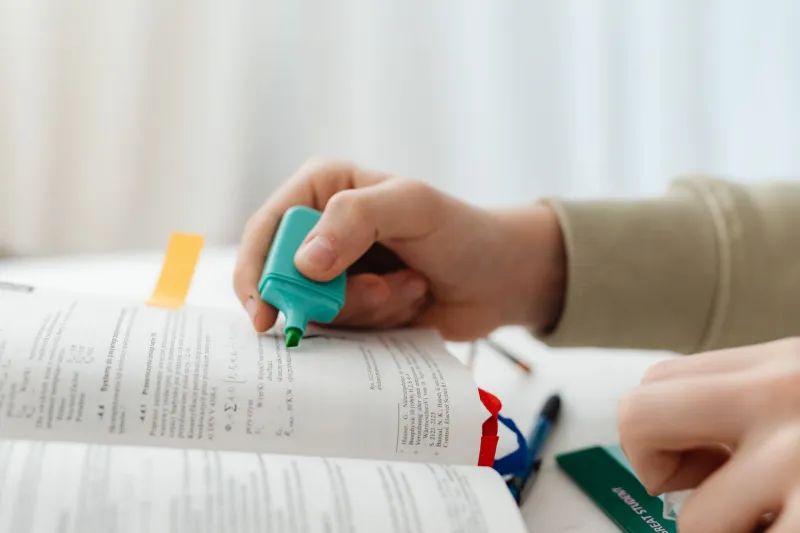
Walk into any bookstore in America and you'll find entire sections dedicated to the tools of the annotating trade. Multicolored highlighters, fine-tip pens, flag tabs in a dozen colors, sticky note pads in every size imaginable. This isn't accidental. The demand is real, and it's growing.
Serious annotators often develop elaborate personal systems. One color for quotes they love. Another for passages they disagree with. A third for lines they want to memorize. Asterisks for plot twists. Question marks for things that don't add up. Brackets around paragraphs so good they deserve a second read.
"My system has evolved over five years of doing this," explains Jordan, a 27-year-old graphic designer from Austin who documents his annotated books on Instagram. "Blue is for beautiful writing. Pink is for anything emotionally devastating. Green is for when I think the author is wrong about something. My books look insane, but I can open any of them and immediately remember exactly how I felt reading it."
That last part — remembering how you felt — is maybe the most compelling argument for annotation. A marked-up book isn't just a story you read. It's a record of who you were when you read it.
Bookstagram's Obsession With the Marked-Up Page
If you've spent any time on the bookish corners of Instagram, you've probably noticed something: photos of heavily annotated pages get engagement. Like, serious engagement. Flat lays featuring color-coded tabs sticking out of a paperback, close-ups of handwritten margin notes, spreads of highlighted pages — these posts rack up thousands of likes and comments from readers who want to compare systems, swap tips, or just appreciate the sheer beauty of a well-loved book.
This is a meaningful cultural shift. For decades, writing in books carried a faint stigma. You were taught to keep them clean, treat them gently, never crack the spine. Libraries stamped "DO NOT WRITE IN THIS BOOK" on the inside cover. The idea was that a book was a sacred object, and marking it up was a form of damage.
The annotation community has flipped that script entirely. In these circles, a pristine, untouched book raises eyebrows. A book with color-coded tabs, margin conversations, and a broken spine? That's a book that was read. That's a badge of honor.
"I used to feel almost guilty writing in my books," admits Priya, a 34-year-old librarian from Chicago. "Now I feel guilty when I don't. If a book moved me and I have nothing to show for it, did I really give it my full attention?"
More Than a Trend — A Different Kind of Reading
It would be easy to dismiss the annotation movement as a social media aesthetic — another pretty thing to photograph and post. But spend five minutes talking to actual annotators and you realize this runs much deeper than aesthetics.
For many readers, annotation is a form of active intellectual engagement that transforms a passive experience into something participatory. You're not just absorbing someone else's words; you're in dialogue with them. You're pushing back, agreeing loudly, asking questions, drawing connections to other books you've read or experiences you've had.
Some readers use their annotated books as the foundation for book club discussions. Others return to old annotations years later as a kind of personal time capsule — a way of visiting the person they used to be. A copy of The Great Gatsby covered in the anxious, searching notes of a 19-year-old college sophomore hits differently when you pick it up at 40.
"I kept my annotated copy of Giovanni's Room from when I was 22," says Marcus, a 38-year-old writer from Brooklyn. "Reading my own margin notes now is almost more interesting than reading the novel again. I can see exactly what I understood and what I completely missed. It's like a conversation between my younger self and my current self, with James Baldwin moderating."
Getting Started With Your Own Annotations
If you've been eyeing your bookshelf and feeling the urge to pick up a pen, here's the good news: there are no rules. Your system is yours. Some readers prefer pencil for its impermanence. Others go all-in with permanent markers because commitment is the point. Some write full sentences; others just draw a line and a question mark.
The only wrong way to annotate is to not do it at all — at least according to the people who've made it central to how they read.
Start small. Grab a book you already own (not a library copy, please), find a passage that hits you, and underline it. Write one word in the margin about why it matters to you. That's it. That's the beginning.
Because here at iReadPages, we believe every page tells a story — and the best stories are the ones where you show up as a participant, not just an audience.
Your books are waiting. Bring a pen.