Writing Back to the Author: Inside the Readers Who've Turned Their Books Into Two-Way Conversations
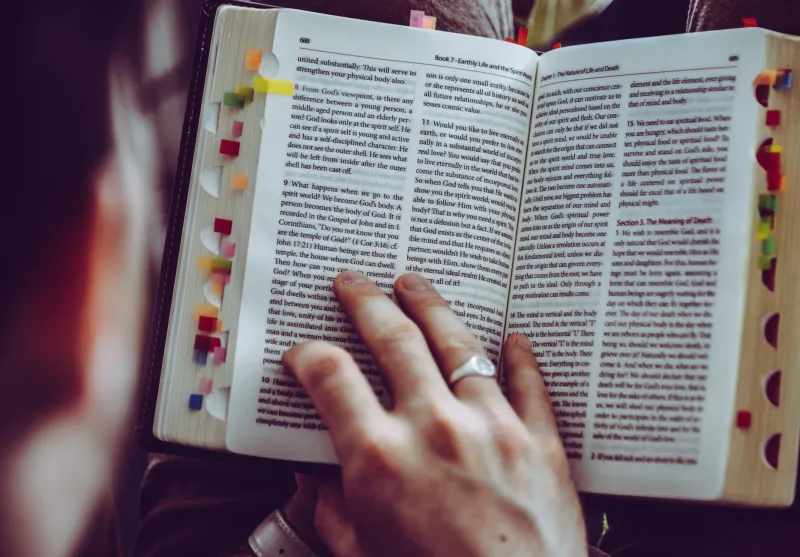
There's a copy of Beloved sitting on a shelf in Portland, Oregon, that looks less like a novel and more like a manuscript that got into a fight with its reader. Pink tabs mark every instance of memory disruption. Blue underlines flag moments of unreliable narration. And in the margins — in a cramped, urgent hand — there are questions, arguments, and occasionally just the word no written emphatically next to a passage.
The owner, a 34-year-old middle school teacher named Dana, has been annotating books this way for almost a decade. She didn't learn it in school. She invented her own system, refined it over hundreds of books, and recently started posting photos of her annotated pages to her small but dedicated Instagram following.
"I used to feel like I was ruining books," she says. "Now I feel like I'm finally reading them."
Dana isn't alone. Across the country, a growing community of readers is moving far beyond the occasional underline or dog-ear. They're building elaborate, personalized annotation frameworks that transform their books into layered documents — part reading journal, part intellectual sparring match, part love letter to literature itself.
A Practice With Deep Roots
Annotating texts is hardly new. Scholars have done it for centuries. Medieval monks covered manuscripts with commentary. Charles Darwin filled his books with furious marginal debates. Sylvia Plath's annotated library is considered a cultural artifact in its own right.
But for most of the twentieth century, writing in books carried a faint social stigma — the kind of thing you might do in college out of necessity, but not something respectable readers admitted to doing for pleasure. Used bookstores built entire personalities around the thrill of finding a previous owner's notes, which suggests people always understood the intimacy of the practice, even when they kept their own pens capped.
What's shifted recently is the sense of community around it. Readers are no longer developing annotation habits in isolation. They're sharing them — on TikTok, in Reddit threads, in Discord servers dedicated entirely to close reading techniques. And what they're sharing isn't just pretty aesthetic photos of color-coded pages. It's methodology. It's craft.
The Systems People Are Actually Using
Talk to dedicated annotators and you quickly realize there's no single approach — which is kind of the point. The most committed readers have developed systems as personal as a signature.
Some use color exclusively. One common framework assigns warm tones to emotional or character-driven moments and cool tones to structural or thematic observations. Another reader on a popular book forum described using seven distinct highlighter colors, each tied to a specific lens: narrative voice, power dynamics, imagery, pacing, dialogue authenticity, historical context, and personal resonance.
Others work primarily in symbols. A circled word means "look this up." A bracket with an asterisk signals a passage worth returning to during a reread. A small question mark in a box indicates genuine confusion, as opposed to a plain question mark, which signals productive ambiguity — the kind the author probably intended.
And then there are the conversationalists — readers like Dana who write full responses in the margins. Not summaries of what the text says, but reactions to it. Pushback. Connections to other books. Personal memories triggered by a line. Sometimes, full counter-arguments.
"I wrote three paragraphs arguing with Cormac McCarthy in the margins of The Road," one reader posted in a close-reading community on Reddit. "He didn't respond, obviously. But I felt heard."
What's Actually Happening in Your Brain
The impulse to engage this actively with text isn't just aesthetic — there's real cognitive science behind why it works.
Researchers studying reading comprehension have found that generative processing — the act of creating something in response to what you're reading, rather than passively receiving it — significantly deepens both retention and understanding. When you write a question in a margin, you're not just noting confusion. You're forcing your brain to articulate what it doesn't yet know, which primes it to seek and recognize the answer as you continue reading.
Annotation also activates what cognitive scientists call elaborative encoding. By connecting new information to existing knowledge — drawing lines between the book in your hands and another you've read, or a conversation you've had — you're literally building more neural pathways to the memory. The book becomes harder to forget because it's woven into more of what you already know.
There's also something to be said for the physical act of writing. Studies consistently show that handwriting engages the brain differently than typing — more slowly, more deliberately, in ways that encourage synthesis rather than transcription. Putting pen to margin isn't just decorative. It's neurologically distinct from just reading.
Cross-Referencing: The Advanced Move
For the most dedicated readers, annotation doesn't stop at the page level. It extends across books.
Some readers maintain what they call "conversation logs" — separate notebooks or digital documents that track how ideas evolve across everything they read. A passage in James Baldwin connects to a line in Ta-Nehisi Coates, which echoes something in Ralph Ellison. The note in the margin becomes a thread, and the thread becomes a map.
Others build cross-reference systems directly into their books. A note at the bottom of a page in one novel might read simply: "cf. Housekeeping, p. 112" — a breadcrumb leading to a thematically resonant moment in Marilynne Robinson. Over time, a reader's library stops being a collection of separate objects and starts functioning as a single, interconnected document.
"My books talk to each other now," one reader described it in a community thread. "I'm just the one taking notes at the meeting."
The Sharing Economy of Annotation
What makes this moment genuinely different from previous generations of margin-writers is how openly people are sharing their techniques — and how much those techniques are spreading.
Annotation tutorials have found real audiences on YouTube. Close-reading communities on Discord host monthly "annotation showcases" where members photograph their most interesting marked-up pages. Some readers have built followings specifically around their annotation aesthetics, posting images that are as carefully composed as any bookstagram flat lay, but focused on the writing rather than the cover.
There's also a pedagogical dimension emerging. Educators are incorporating reader-developed annotation frameworks into classrooms, recognizing that students who see annotation as a personal creative practice engage with it more authentically than those who see it as an assignment requirement.
Your Book, Your Voice
At its core, the annotation movement is about ownership — not in a proprietary sense, but in a deeply personal one. It's the reader's insistence that a book isn't finished when the author puts down their pen. It continues in every set of eyes that moves across the page, and it changes with every reader who decides to write back.
The pages you mark are a record of who you were when you read that book. The questions you scrawled in the margins at 25 will look different when you return at 45. The arguments you made, the connections you drew, the passages you starred because they felt like they were written specifically for you — all of it becomes part of the book's life.
That's what Dana means when she says she's finally reading. Not consuming. Not absorbing. Reading — actively, messily, personally, in full conversation with the voice on the page.
Some authors, she figures, would probably hate it. But she keeps writing back anyway.