After Midnight, the Bookshelves Come Alive: Inside America's Late-Night Bookstore Revolution
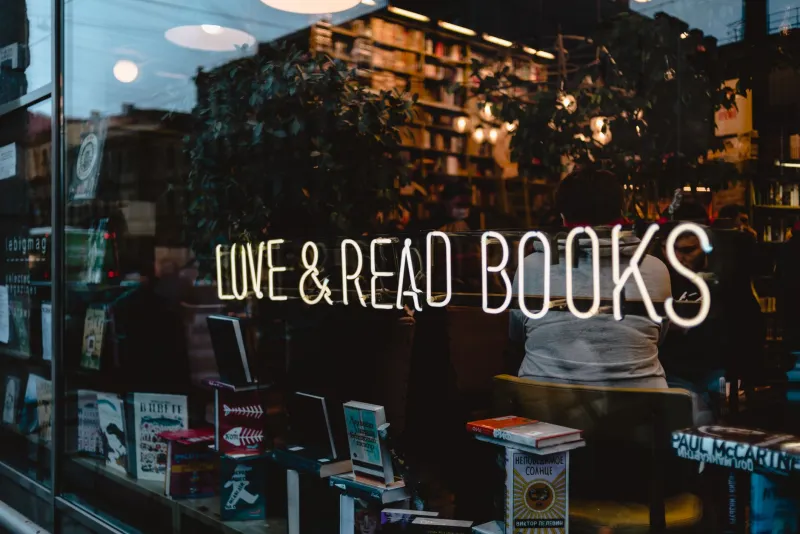
There's a particular kind of quiet that settles over a bookstore after 10 p.m. It's not the silence of emptiness — it's something warmer than that. Softer. The kind of hush that makes you want to whisper, even when you don't have to. And increasingly, across cities big and small, readers are discovering that this is exactly when they want to show up.
Late-night independent bookstores are having a moment. Not in a flashy, trend-piece kind of way, but in the slow, genuine way that actually sticks. Store owners who once shuttered their doors by 7 or 8 p.m. are experimenting with extended hours, and what they're finding on the other side of that decision is nothing short of remarkable: a whole community of readers who had nowhere to go.
The Gap Nobody Knew Existed
Walk through any American city at midnight and you'll find coffee shops, bars, diners, the occasional 24-hour pharmacy. But a place to browse books? To sit with a cup of something warm and flip through a novel without buying anything? That's been nearly impossible to find — until recently.
Sociologists have long talked about the concept of a "third place" — somewhere that isn't home, isn't work, but is still yours in some meaningful way. For decades, that role belonged to diners and coffee shops. But a growing number of bookstore owners are realizing their spaces might be uniquely suited to fill that need, especially for the people who don't keep conventional hours.
Night-shift workers, freelancers burning the midnight oil, parents whose kids have finally gone to sleep, insomniacs who've given up on staring at the ceiling — these aren't fringe customers. They're a massive, largely underserved slice of the American reading public. And when bookstores started staying open for them, they showed up.
What Actually Happens After Dark
The vibe inside a late-night bookstore is genuinely different from its daytime counterpart. The after-work rush has cleared out. Nobody's rushing anywhere. Conversations between strangers — the kind that would feel intrusive at noon — happen naturally, almost inevitably.
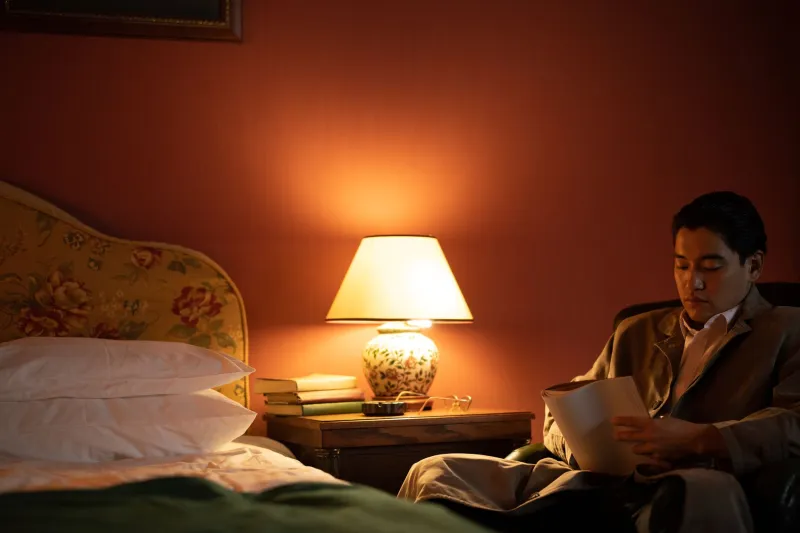
Regulars at these spaces describe chance encounters that sound almost cinematic. A woman browsing the mystery section strikes up a conversation with a stranger who turns out to have written one of the books she's holding. Two insomniacs reach for the same title at the same moment and end up talking for two hours. A grieving widower finds himself in a corner chair every Tuesday at 11 p.m., working through a stack of his late wife's favorites, surrounded by people who never ask him why he's there so late.
There's something about the late-night context that strips away the performative layer that can creep into daytime bookstore culture. Nobody's there to be seen. Nobody's staging an Instagram moment. They're just there because they needed somewhere to be, and the books pulled them in.
Owners Who Took the Leap
Extending hours isn't a casual decision for an independent bookstore. Staffing costs go up. Security becomes a conversation. The math doesn't always work neatly on paper. But owners who've made the leap often describe the same thing: they didn't do it because they crunched the numbers. They did it because a customer asked, and the question stuck with them.
Many report that their late-night crowds skew toward people who work in healthcare, hospitality, and service industries — professions that have always run on opposite schedules from the rest of the world. For a night-shift ER nurse who gets off at 7 a.m. and can't fall asleep until noon, a bookstore that opens at 10 a.m. might as well not exist. But one that stays open until 1 a.m.? That's a lifeline.
Some stores have leaned into the atmosphere deliberately — dimming the overhead lights slightly, adding floor lamps, partnering with local roasters to keep a coffee bar going through the late hours. Others have kept things exactly as they are during the day and found that the darkness outside does the atmospheric work for free.
The Community That Builds Itself
One of the most striking things about late-night bookstore culture is how organically community forms within it. Daytime bookstores often have to engineer connection — through book clubs, author events, curated reading groups. After midnight, the connection seems to happen on its own.
Part of that is simply selection bias. The people who are in a bookstore at 11:30 p.m. on a Wednesday have already self-selected into a particular kind of tribe. They value books enough to seek them out at an unconventional hour. That shared weirdness — and it is a kind of wonderful weirdness — becomes an instant bond.
Regulars at late-night stores often describe a feeling of being recognized in a way that goes beyond the staff knowing their name. It's the recognition of being seen as someone who belongs to a particular kind of world. A reader's world. And in an era when so many people feel increasingly disconnected from their communities, that recognition carries real weight.
What This Means for the Future of Independent Bookstores
The indie bookstore world has been through a lot. The Amazon years. The e-reader scare. The pandemic. Every few years, someone writes the obituary, and every few years, independent booksellers find a new reason to prove them wrong.
Late-night hours might be the latest chapter in that ongoing survival story. Not because they're a magic financial fix — they're not — but because they represent something more important: a willingness to ask who isn't being served yet, and then actually do something about it.
If the bookstore of the future is a community hub as much as a retail space, then the hours it keeps matter enormously. A store that closes at 6 p.m. is a store for people with conventional schedules and conventional lives. A store that stays open until midnight is a store for everyone else, too.
The Simple Magic of a Light Left On
There's an old idea that a bookstore is a kind of sanctuary. A place where the chaos of the outside world gets left at the door, and what waits inside is quieter, richer, more considered. That idea has always been true. But it turns out it's especially true at midnight.
For the readers who've found their way to these late-night spaces — the insomniacs, the shift workers, the restless and the grieving and the simply curious — the bookstore after dark isn't just a place to buy books. It's proof that someone left a light on for them.
And in a world that often feels like it wasn't designed with them in mind, that light means everything.