Every Book You've Ever Read Is a Chapter in Your Own Story
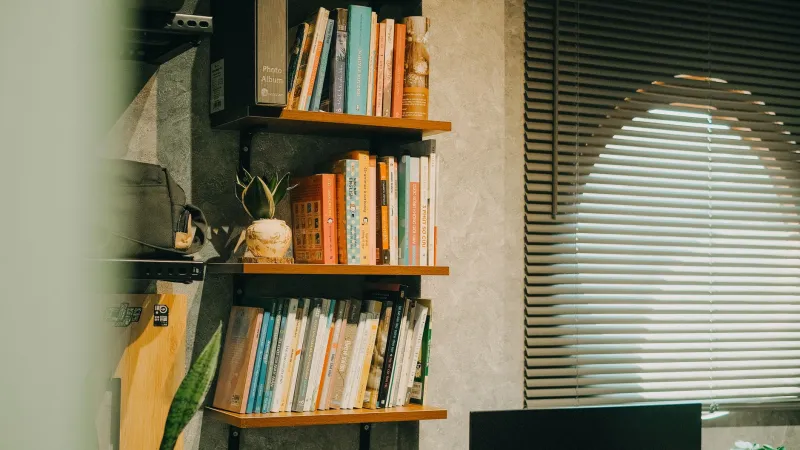
There's a box in most people's closets — or a dusty shelf in a childhood bedroom — stacked with books that no longer feel like yours. Middle-grade paperbacks with cracked spines. A dog-eared self-help title from a rough patch in your mid-twenties. A novel your ex recommended that you actually loved but can't display anymore without a complicated feeling. Those books aren't just old reads. They're evidence.
The chronological record of what we've read is one of the most honest documents we'll ever produce. Nobody curates it for an audience. Nobody chooses their reading history to impress anyone — at least not entirely. And when you lay it out in sequence, decade by decade, you start to see something that looks a lot less like a reading list and a lot more like a life.
The Books We Chose When We Didn't Know Better
Most readers can point to a single genre or series that defined their early years. For a huge chunk of American readers, it was fantasy — the escapism of worlds with clear rules, defined heroes, and satisfying endings. For others, it was sports biographies, or those Goosebumps paperbacks traded at recess like currency.
What's interesting isn't just what those books were. It's why we needed them. Children reach for fiction that gives them control over the chaos they can't name yet. The kid obsessed with survival stories probably felt like they were navigating something difficult at home. The one who read every single Nancy Drew or Hardy Boys mystery was practicing the art of making sense of a confusing world.
You don't have to psychoanalyze your eight-year-old self too hard. But it's worth pausing over those early choices, because they usually reveal something true about what you needed — and what you were already beginning to look for in stories.
The Genres We Abandoned (And What That Says)
Here's a question worth sitting with: What did you stop reading, and when?
A lot of readers quietly drift away from certain genres during major life transitions and never really examine why. The person who devoured romance novels through college and then abruptly stopped after a painful breakup. The one who couldn't pick up another thriller after a health scare made mortality feel too close. The reader who loved literary fiction in their twenties and then, somewhere around the chaos of new parenthood, switched entirely to nonfiction because they simply couldn't hold fictional stakes in their head anymore.
These aren't just shifts in taste. They're the mind protecting itself, or redirecting. Genre abandonment is one of the most revealing entries in your reading autobiography — not because those books failed you, but because you changed, and the books stayed the same.
The Themes That Keep Coming Back
On the flip side, most readers have a handful of themes they return to over and over, often without realizing it. Pull up your reading list from the last ten years and look for the throughline. Redemption stories. Books about complicated mothers and daughters. Narratives about people who walk away from their old lives and build something new. Stories about grief dressed up as something else.
These recurring themes are the questions you're still working on. The stuff that isn't resolved yet. Readers often describe the experience of finding a book that speaks directly to something they're wrestling with as almost eerie — like the library knew. But really, you knew. You kept reaching for those stories because some part of you was still trying to find the answer, or at least feel less alone in the asking.
One reader in her early forties described pulling out a list of every book she'd read since her divorce and realizing that nearly every single one, across wildly different genres, was about reinvention. Memoirs, novels, even a business book she thought she picked up for practical reasons. "I wasn't reading randomly," she said. "I was building a case for myself. Collecting permission."
The Authors Who Wired Something Differently
Then there are the writers who don't just accompany a phase of your life — they actually reshape how you think. Not every reader has one of these, but many do. The author whose work you encountered at exactly the right moment and came away from with a fundamentally different set of questions.
For some people it's Toni Morrison, read in a high school English class that cracked something open. For others it's David Sedaris making them realize that humor could be a vehicle for the most painful truths. Or Joan Didion teaching them that grief doesn't follow rules. Or a lesser-known writer they found at a used bookstore on a random Tuesday who articulated something they'd never been able to name.
These authors show up in the reading timeline like landmarks. Before and after. The books that preceded them feel like one version of you; the ones that came after feel like another.
How to Actually Read Your Own Timeline
If this is making you want to dig through your own reading history, here's how to actually do it. Don't just look at what's on your shelf right now — that's a curated snapshot. Instead, try to reconstruct the full sequence. Goodreads shelves, old Amazon orders, notes in journals, the actual physical books you still own.
Then ask a few simple questions for each era: What was happening in my life at this point? What was I afraid of? What was I hoping for? What did I stop reading, and what did I suddenly need?
You don't need to draw grand conclusions. The exercise itself is the thing. Most readers who try it describe a strange, clarifying feeling — like suddenly being able to read a map you've been holding upside down for years.
The Story You're Still Writing
Here's the part that makes this more than just a nostalgic exercise: your reading history isn't finished. Whatever you're reaching for right now, whatever's stacked on your nightstand or queued in your library app, is already part of the record. Future-you will look back at this moment and understand something about present-you that present-you might not fully see yet.
That's one of the stranger, lovelier things about being a reader. You're always leaving yourself a trail of breadcrumbs. The books don't just tell you who you were — they're already hinting at who you're becoming.
So maybe the question isn't only what you're reading. It's what you're trying to figure out. And the shelf, as always, already knows.