The Library You Didn't Ask For: Learning to Love, Let Go, and Live With a Parent's Books
The boxes arrived on a Tuesday. Eleven of them, shipped from her mother's house in rural Vermont to her apartment in Seattle. Claire, 38, knew what was inside before she cut the first piece of tape. Books. Hundreds of them. Her mother's entire reading life, compressed into cardboard and packing paper, now stacked against her living room wall.
"I sat down on the floor and just cried," she says. "Not because I was sad, exactly, though I was. But because I had absolutely no idea what I was supposed to do with any of it."
If you've lost a parent who was a reader — a real one, the kind with floor-to-ceiling shelves and a system only they understood — you probably know this feeling. The inherited library is one of grief's stranger gifts. It arrives full of love and memory and someone else's entire intellectual life, and it asks you, gently but persistently, to figure out what it means to you now.
A Life in Spines
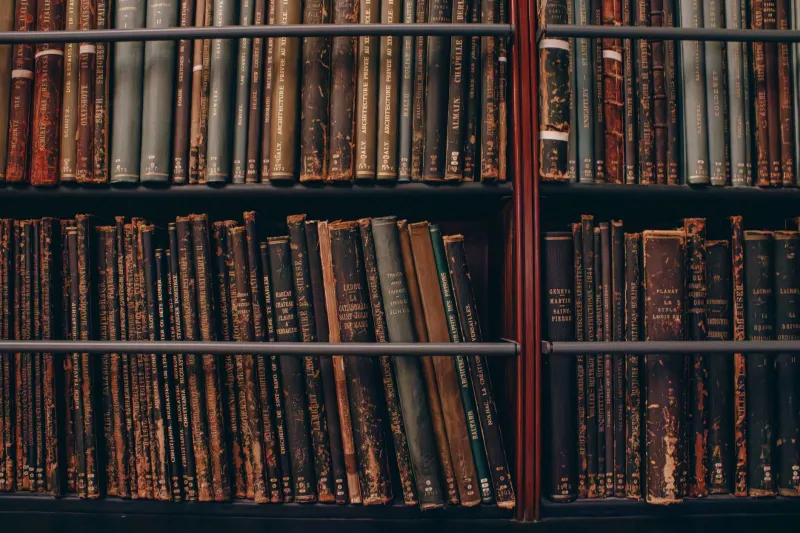
Books accumulate meaning in ways that other objects don't. A parent's library isn't just a collection of titles — it's a record of who they were, what they thought about, what scared them, what delighted them, what they returned to again and again over decades. The annotations in the margins. The receipts used as bookmarks. The dog-eared pages and underlining that tell you, in a very specific way, exactly where their mind went.
For many adult children sorting through inherited collections, the first pass through the shelves is less an organizational task and more an act of archaeology. You find books you didn't know they'd read. Subjects that surprise you. Old paperbacks from before you were born that reveal a version of your parent you never got to meet.
Marcus, 45, from Nashville, spent three weeks cataloging his father's library after he passed. His father had been a quiet man, not given to long conversations about inner life. The books told a different story. "He had this whole section on the Civil Rights Movement that I'd never noticed growing up. And poetry — shelves of it. I didn't even know he liked poetry. I found myself reading things he'd underlined and thinking, who were you? In the best possible way."
The Guilt Arrives Right on Schedule
Here's the part nobody prepares you for: the guilt.
Most people who inherit large book collections find, after the initial wave of grief and discovery, that they simply cannot keep all of it. The practical reasons are numerous — space, shelf capacity, the reality that a 70-year-old's reading tastes and a 40-year-old's don't always overlap. But the emotional math is brutal. Getting rid of a parent's book feels, to many people, like getting rid of a piece of the parent.
"I kept picking up books and thinking, she touched this," says Claire. "She read this whole thing. She had thoughts about it. And I'm putting it in a box to donate? It felt wrong."
This is an experience grief counselors hear about more often than you might expect. "Objects carry attachment," says Renee Holloway, a grief therapist practicing in Phoenix. "Books, especially, because they're so tied to identity and interior life. When a client tells me they can't bring themselves to donate a parent's books, I never try to talk them out of that feeling. We try to understand it first."
Holloway often works with clients to develop what she calls a "curation ritual" — a deliberate, meaning-making process for going through the collection rather than treating it as a logistical problem to solve. "The question isn't just 'what do I keep.' It's 'what do I want to carry forward from this person's reading life into my own?'"
What Actually Helps
Readers who've navigated this process — and come out the other side with both their sanity and something meaningful from the collection — tend to describe a few approaches that made the difference.
Reading one book before deciding. Several people mentioned choosing a single title from the collection they wouldn't normally pick up and reading it before making any decisions about the rest. Something about engaging with the books as books — rather than as objects or relics — helped shift the emotional register. "I read one of my mom's favorite novels that I'd always avoided because it wasn't my genre," says Claire. "I loved it. It felt like a conversation we'd never had."
Keeping the strange ones. Almost universally, people who've sorted through inherited libraries describe keeping the titles that surprised them — the ones that revealed something unexpected about who their parent was. The collection doesn't have to match your taste to be worth something.
Creating a dedicated shelf. Rather than integrating the inherited books into their existing collection or feeling obligated to keep everything, many readers have found peace in designating a single shelf — the parent's shelf — that holds a curated selection. Not a museum, but a presence.
Giving books to people who'll use them. Donating to a library, a Little Free Library, or a community center carries a different emotional weight than just dropping boxes at Goodwill. The idea that your parent's books will go on being read — by strangers who'll bring their own lives to the pages — is genuinely comforting to many people.
Photographing before letting go. For books they couldn't keep but couldn't quite release without acknowledgment, some readers have photographed the covers, the inscriptions, the annotated pages — creating a digital record of what the collection was before it dispersed.
The Question of Identity
Underneath the logistics is a deeper question that the inherited library forces you to confront: who are you as a reader, separate from the person who raised you?
For some people, a parent's library is a mirror — it shows you where your own tastes came from, the lineage of your reading life. For others, it reveals how far you've traveled. There can be real discomfort in looking at a shelf full of books you genuinely have no interest in reading and recognizing that this was the interior life of someone you loved.
Marcus found his father's poetry shelves eventually led him to build his own. "I started reading the poets he'd underlined. Then I found my own. Now I have a poetry section that started with his books and grew into something that's completely mine. That feels like the right inheritance."
Claire kept 23 books from her mother's collection. The rest went to a public library in Vermont that her mother had volunteered at for fifteen years. "They put a small bookplate in some of them," she says. "Her name, and the year. I like thinking about someone in that town pulling a book off the shelf and finding her there."
The Library Lives On
Books are among the most personal things a person can own and one of the most generous things they can leave behind. An inherited library is grief and gift at once — a whole reading life handed to you, asking only that you decide what it means.
You don't have to keep all of it. You don't have to read all of it. You don't even have to love all of it.
But somewhere in those spines is a version of the person you lost, still thinking, still curious, still underlining the sentences that mattered. That part, at least, is worth sitting with for a while.