Half a Memory, One Obsessive Search: The Readers Who Won't Rest Until They Find That Forgotten Book
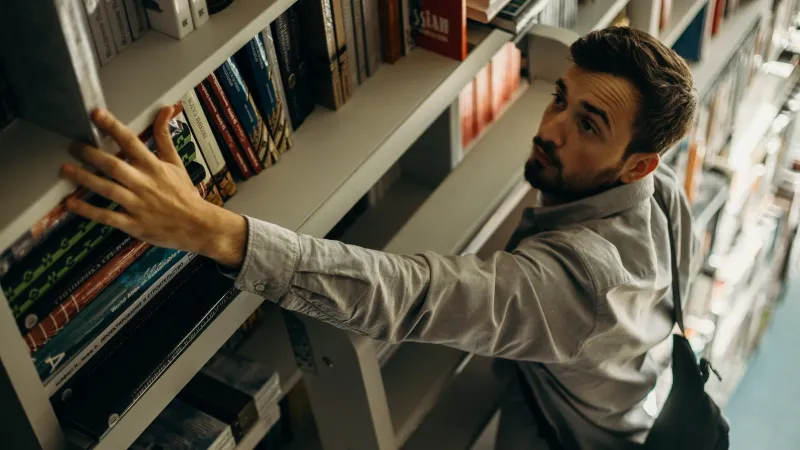
It starts innocently enough. You're folding laundry, or stuck in traffic, or just drifting off to sleep when a fragment surfaces — a story you read maybe twenty years ago, or maybe last decade, you genuinely can't be sure. There was a red barn on the cover. Or maybe it was orange. The main character lost someone important. There was definitely a train.
And just like that, you're gone. Dinner gets cold. Sleep gets skipped. Browser tabs multiply. Welcome to one of reading culture's strangest and most quietly consuming rituals: the hunt for the book that got away.
The Itch That Won't Quit
Ask any librarian who's worked a reference desk for more than a few years and they'll tell you: this is real, it's common, and the people who come in searching are genuinely distressed. Not frustrated — distressed. Like something important has gone missing.
"I had a woman come in three times over the course of a month," says a reference librarian at a public library branch in Columbus, Ohio, who asked to remain anonymous because she wasn't authorized to speak to press. "All she could remember was that the cover was purple, there was a grandmother character, and she read it in the early nineties. We eventually found it through a regional catalog database. She actually cried."
That emotional charge is worth examining. We're not talking about someone trying to remember a movie title or a song lyric — this is a book, something that required hours of intimate attention, something that left a mark specific enough that the reader knows, decades later, that it mattered. The forgetting feels like a small betrayal. The finding feels like reunion.
Reddit's Most Wholesome Detective Agency
If public libraries are the old-school solution, Reddit's r/tipofmytongue community is the modern one — and it has become an astonishing resource for exactly this kind of literary amnesia. The subreddit, which boasts well over a million members, fields dozens of book-related requests every single day. Descriptions range from impressively specific to almost comically vague.
"I'm looking for a book I read in elementary school. The cover had a kid on a bike. It might have been set in summer. There was a dog? Or maybe a cat? It made me feel sad but also happy at the end." That post, which sounds like it should be unsolvable, received a correct answer within forty minutes.
The community has developed something like a collective superpower. Regular contributors have read so broadly, across so many genres and decades, that they've essentially become a distributed catalog of American publishing. They know the Goosebumps backlist cold. They can identify obscure eighties YA novels from two plot details. They remember every book that featured a specific plot device popular in nineties literary fiction.
Readers who've had their searches resolved describe the moment of confirmation in almost spiritual terms. "When someone replied with the title, I genuinely got goosebumps," wrote one user in a follow-up comment after their search for a childhood chapter book finally ended. "I don't even have the words for what that felt like."
Why These Particular Books Haunt Us
There's a psychological dimension here that's worth sitting with. The books we forget completely — the ones that leave zero trace — don't send us searching. It's specifically the ones that lodged somewhere deep and then slipped their title and author that drive this behavior. Which raises the question: what made them stick in the first place?
Memory researchers have a concept called the "reminiscence bump" — the tendency for adults to most vividly remember experiences from adolescence and early adulthood. Books consumed during those formative years don't just entertain; they contribute to identity formation. A story absorbed at thirteen might have quietly shaped how you think about loyalty, or loss, or what it means to be brave. The plot details fade but the emotional residue doesn't.
"These aren't just forgotten books," says one reader from Portland who spent eight months tracking down a novel she'd read in high school. "They're like... pieces of who you were. Finding the book is almost like finding evidence that a version of yourself existed."
That framing — the book as artifact of a past self — explains a lot about the intensity of these searches. It's not really about the book. It's about continuity. About proving that the story was real, that it happened, that it meant something.
The Librarian as Literary Detective
Reference librarians have been doing this work long before Reddit existed, and many of them have developed genuinely impressive methodologies. Beyond the standard catalog searches, experienced reference professionals lean on resources like NoveList, WorldCat, and networks of colleagues across library systems. Some have built personal notebooks of unusual requests, cross-referenced by genre, decade, and the specific emotional quality readers describe.
"People almost never remember titles or authors accurately," notes a librarian from a large urban branch in Chicago. "But they remember feelings. They remember that the book made them feel claustrophobic, or free, or like the world was bigger than they thought. If you can work backward from the feeling, you can often find it."
This emotional forensics approach — diagnosing a book from its psychological fingerprint — is both art and science. And librarians who are good at it describe it as one of the most satisfying parts of the job.
The Find Is Only Half the Story
Here's the complication nobody mentions until it happens to them: sometimes you find the book, and it doesn't hold up. The prose that felt luminous at twelve reads as clunky at forty. The twist you remembered as devastating lands with a soft thud. The world you thought the book contained turns out to be smaller than your memory made it.
Readers who've experienced this describe it as genuinely strange — a grief for something that was never quite as real as they believed. But even this outcome seems to be part of the ritual's value. Because what you discover, in those cases, is that the version you carried was the real artifact. The actual book was just the raw material. You built the rest.
And sometimes, of course, the book is exactly as good as you hoped. Sometimes better. Those are the reunions that readers describe with the kind of warmth usually reserved for old friends showing up unannounced.
Either way, the search was worth it. Every page of it.